
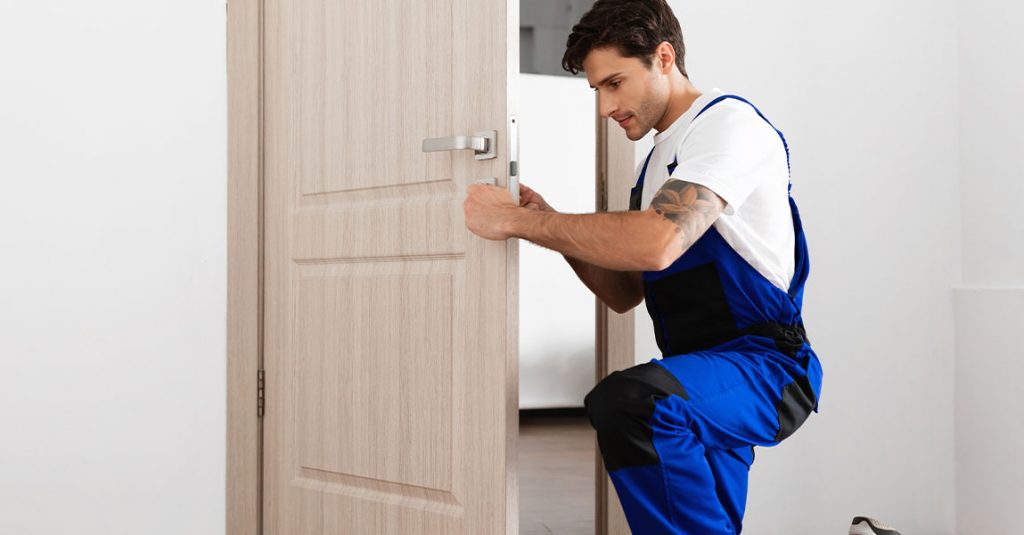
Front doors are the main entry points to most homes. Even with a solid lock in place, there are ways someone can bypass or tamper with it. We do not always need a full lock replacement to boost our home’s safety. Instead, several practical steps can upgrade door security using tools and parts that work with what is already installed. These changes help delay or stop forced entry without major alterations.
Add a Reinforced Strike Plate
Strike plates hold the bolt in place when the door is locked. Standard ones are thin and easy to bend or break during forced entry. A heavy-duty strike plate made from thick metal and secured with long screws adds strength where it matters most. Longer screws dig deeper into the wall stud, not just the door frame.
We always recommend choosing four-screw plates over two-screw versions. That way, the bolt resists more force. For example, an intruder trying to kick in the door will meet much more resistance with a reinforced strike plate in place. Many homeowners see this as one of the most cost-effective changes for better security.
If someone is unsure how to start, professional help is always available. You can explore trusted residential locksmith Ottawa experts for assistance with proper installation and advice.
Install a Door Reinforcement Kit
Some parts of the door are easier to break than others. The area around the handle, bolt, and hinges can crack under pressure. A door reinforcement kit adds solid metal pieces along those weak points. This keeps the door structure from splitting or warping when hit or pried open.
Our team often adds these kits when doors show wear or signs of tampering. The components include hinge shields, door edge guards, and lock area reinforcements. With these pieces in place, your lock works better because the door itself becomes stronger. These kits are easy to find and usually fit most doors without major adjustments.
Because they are installed on the inside, these upgrades don’t affect the door’s appearance. So, they’re ideal for anyone looking to improve safety while keeping the original look.
Use a High-Security Deadbolt Cylinder
Sometimes, the problem is not the lock itself but the cylinder inside it. Basic cylinders are vulnerable to picking, bumping, or drilling. A high-security cylinder can resist those tricks. That means even if someone has tools or a blank key, it becomes much harder to tamper with the lock.
These cylinders are compatible with many deadbolts. We often switch them out while keeping the outer hardware intact. This way, the upgrade focuses only on the part that needs better protection.
Certain models include anti-drill pins, restricted keyways, and bump-proof designs. We suggest asking for those features when selecting a cylinder. It gives peace of mind without needing to remove the whole lock.
Add a Security Bar or Door Brace
Physical barriers do not need to be complex to work. A door brace or security bar placed at floor level can stop the door from opening even if the lock fails. This is especially helpful at night or when you are home for long periods. It adds a second layer of defense in case someone tries to force their way in.
We find these most useful for single-entry homes or front doors without deadbolts. The best options are adjustable, fit under the doorknob, and grip the floor securely. Once in place, the door cannot swing open no matter what happens with the lock.
These tools do not require installation and can be moved easily. As a result, renters or people in shared living spaces often rely on them as added protection.
Use Smart Lock Add-Ons for Monitoring
Not all smart locks require a full replacement. Some add-ons work with traditional locks and provide tracking or remote access. That way, we can know exactly when the door opens or if someone tampers with it. A small device placed inside near the bolt is all it takes.
These add-ons often link to a mobile app and let you monitor activity or get alerts. Some models also allow remote locking and unlocking, so you never worry about leaving the door open. We’ve installed these for homeowners who want modern features but prefer to keep their current lock design.
Look for add-ons that include sensors for both the lock and door movement. These give more complete feedback and work better as part of a home security plan.
Secure the Door Hinges
Hinges are often overlooked, especially if they’re exposed on the outside. A strong lock does little good if the hinges are weak or removable. That’s why we check for non-removable hinge pins or add hinge bolts to strengthen this area.
When someone tries to remove the pins or tamper with the hinge side, hinge bolts stop the door from being pulled out. This creates an extra connection between the door and frame. For outward-opening doors, this upgrade is one of the most important steps.
If your hinges are older or loose, replacing the screws with longer ones will also help. It keeps everything tight and aligned while adding more grip in the wood.
Layer Your Entry Points with Multiple Locks
Adding a secondary lock gives more control over who enters and when. Chain locks, sliding bolts, or surface-mounted deadbolts all create extra steps for an intruder. They’re also useful for safely opening the door a few inches to speak to someone without letting them in.
One of the best combinations we’ve used is a traditional deadbolt with a swing bar lock. The swing bar is strong, simple to install, and lets you check who’s outside without unlocking everything. When used properly, this kind of setup makes unauthorized entry far less likely.
Adding layers is not about paranoia. It is about buying time. The longer it takes to get past the door, the more chance someone inside can respond or call for help.
Check the Door Frame and Material
No lock works well on a weak or damaged frame. If the wood around the door has cracks, warping, or soft spots, that area becomes a target. Reinforcing the frame or replacing damaged parts is a smart way to protect the lock you already have.
We often use metal door edge guards for extra support. They cover the edge of the door and connect across both sides of the bolt. With this added strength, pressure on the bolt spreads over a wider area. That makes it harder to force the door open.
For hollow-core doors or frames showing signs of wear, small upgrades may not be enough. In that case, improving the door material is better than replacing just the lock.
Maintain and Test Your Locks Regularly
Even the best lock wears out or shifts over time. Dirt, rust, and alignment issues can cause slow movement or misfires. We make it a habit to check all entry points every few months. That includes making sure the bolt fully extends and retracts without sticking.
Lubricate the keyway and moving parts with a lock-safe product. Tighten any loose screws in the plate or hardware. If the lock wiggles, feels loose, or needs force, it is time to address the issue before it becomes a failure point.
We’ve seen many situations where simple maintenance prevented costly problems. Regular care keeps your existing setup working like it should.
For more support or a hands-on checkup, many homeowners explore locksmith services in Ottawa to ensure everything functions safely.
Know When to Ask for Help
Security is a shared responsibility. While many upgrades can be done without help, not every situation is safe to handle alone. If a door is misaligned, a lock is failing, or a part won’t fit right, it’s better to get help than risk a gap in protection.
We’ve supported families through various entry issues, including stuck locks, weakened frames, and confusing security add-ons. Every home is different. That’s why a quick talk with someone experienced can make a big difference in finding the right fix.
When ready to get trusted help, use the right way to contact a locksmith professional for advice or service.
FAQ
What is the easiest way to make a front door safer without changing the lock?
Adding a reinforced strike plate with longer screws is one of the simplest and most effective ways to improve door security without replacing anything.
Can I install these upgrades myself, or do I need a locksmith?
Most of the parts like strike plates, braces, and additional locks can be installed by someone comfortable with basic tools, but professional help ensures everything fits and functions correctly.
Are smart locks better than regular locks for home safety?
Smart locks offer extra features like alerts and remote access. However, regular locks with high-security cylinders and proper reinforcement can be just as strong.
How often should I check or maintain my front door locks?
We suggest inspecting locks every three to six months. Look for loose parts, sticking bolts, or wear, and lubricate if necessary.
Do I need to upgrade if my neighborhood feels safe?
Even in quiet areas, unexpected risks can happen. Small, affordable upgrades create peace of mind and delay forced entry in emergencies.