
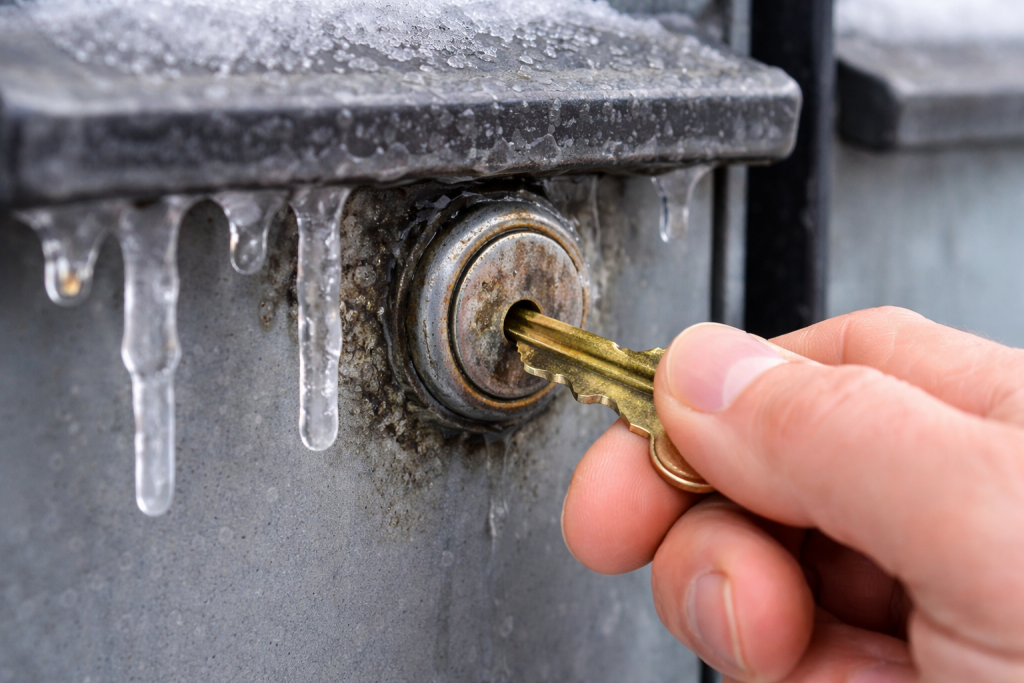
Mailbox lock failure shows up at the worst time, usually when you are in a hurry and the key suddenly feels rough. Therefore, spotting the real cause early can save your key, your lock, and your patience. Your Key Maker handles these problems across Ottawa, and the same patterns repeat in homes, apartments, and community panels.
Small mailbox cylinders face big stress. However, most models use compact parts that cannot tolerate force, dirt, and winter moisture for long. That mix explains why a lock can feel fine for months and then quit in one morning.
mailbox lock failure starts with weather exposure
Ottawa weather pushes water into the keyway, and after that freezing temperatures turn that moisture into a hard stop inside the cylinder. Consequently, the pins drag instead of sliding, so the key resists turning. Many people try to “power through” the resistance, but that choice bends the cam or twists the plug out of alignment.
Cold also thickens old lubricant and makes the lock feel sticky. In other words, the lock may not “freeze” solid, yet it still turns like it has sand inside. Your Key Maker checks the cylinder condition and the door fit, because both problems can create the same symptom.
Corrosion builds slowly, then fails quickly
Rust and oxidation do not announce themselves early. For example, the face may look only slightly dull while the internal parts already collect corrosion. Over time, that corrosion grabs the pins and leaves faint scratch marks on the key. As a result, the key starts needing extra wiggle, and that extra movement increases wear each week.
Dirt and grit turn a smooth lock into a grinder
Mailbox doors sit close to dust, road grit, and windblown debris. Moreover, fine particles stick easily when moisture reaches the metal surface. Each key insertion can push that grit deeper, so the cylinder slowly turns into a grinding tube.
People often spray a general oil into the keyway, but that oil can trap more dust later. Similarly, thick sprays can gum up small parts and make turning worse after a short “improvement.” If the lock feels gritty, cleaning and using a lock safe dry product usually works better than heavy oil.
If you want to see the broader scope of help available for Ottawa properties, locksmith services Ottawa gives an overview of support options through Your Key Maker.
Keys wear out before the lock does
A worn key can still open the mailbox, but it drags the pins and scrapes the plug each time. Therefore, the lock wears faster while the owner blames the cylinder. Look closely at the key teeth: rounded cuts, shiny flat spots, or a bent blade all signal trouble.
Poor quality duplicates add another layer of stress. For instance, a slightly off cut can turn today while forcing the pins into the wrong position. After months of daily use, the cylinder starts to stick, and then mailbox lock failure feels “sudden” even though the damage built up slowly.
When the mailbox door causes the “bad lock” feeling
Not every sticking key points to a broken cylinder. However, a bent door, a sagging hinge, or a warped panel can press on the cam and load the lock during turning. That load makes the key feel jammed because the cam fights door pressure, not because the pins failed.
Try this simple check: apply gentle inward pressure on the mailbox door while turning the key. If the key turns smoother, the door alignment likely drives the problem. Your Key Maker often corrects the door fit while replacing the cylinder, because the best new lock still struggles under constant pressure.
For issues that involve shared panels, gates, or exterior access points, mailbox lock solutions explains the kinds of hardware problems that often travel together.
Habits that cause mailbox lock failure faster
Force breaks mailbox locks more than age does. Most importantly, twisting hard while pulling the door open at the same time bends small parts. So the lock may open once, yet the cylinder alignment shifts and creates future sticking.
Another habit involves leaving keys on a heavy keychain. Consequently, the weight tugs on the key during turning and can stress the plug. A lighter keyring helps, and gentle turning with the door relaxed reduces damage.
If a key will not turn, stop and reassess. To clarify, repeated force raises the chance of a snapped key, and broken pieces inside the keyway block any quick fix.
What to do when you cannot access your mail
Start by reducing load and temperature stress. That is to say, try the door pressure test, and warm the key in your hand before inserting it. Avoid pouring liquids into the cylinder, because water can refreeze and lock the pins even tighter.
When access becomes urgent, Your Key Maker can respond through emergency home lockout assistance to restore access without turning a small lock problem into a broken key problem.
Long term fixes that reduce repeat problems
Sometimes a better cylinder solves repeated issues, especially when the original hardware is low grade. Moreover, correcting door alignment and reducing grit exposure keeps the new lock working longer. For people who also want stronger front entry protection, high security deadbolt installation can pair well with a mailbox upgrade, since package security often connects to overall entry habits.
For homeowners who want a full review of locks and keys around the property, residential locksmith Ottawa covers rekeying, replacements, and practical improvements that fit daily life.
FAQs
Why does my mailbox lock work one day and jam the next?
Temperature swings and moisture can change the internal friction quickly. Therefore, pins that moved yesterday may stick today, especially after a freeze thaw cycle or heavy wet snow.
Can I prevent mailbox lock failure with regular maintenance?
Yes, gentle cleaning and using a lock safe dry product can reduce sticking. Moreover, replacing worn keys early and avoiding force during turning lowers long term wear.
Is it safe to spray WD 40 or oil into the lock?
Those sprays can feel helpful at first, but they often attract dust and create buildup later. In other words, a short term improvement can turn into faster sticking over time.
How do I know if the mailbox door causes the problem?
If the key turns smoother when you press the door inward, alignment likely adds pressure to the cam. Consequently, the lock feels jammed even when the cylinder still has life.
Should I repair the lock or replace it?
Replace the cylinder when corrosion, bent parts, or repeated sticking keeps returning. However, a simple alignment fix or key replacement can solve early symptoms before the lock fails fully.